
EVA shuttles: the future of local transportation begins in the Weiherfeld-Dammerstock district of Karlsruhe
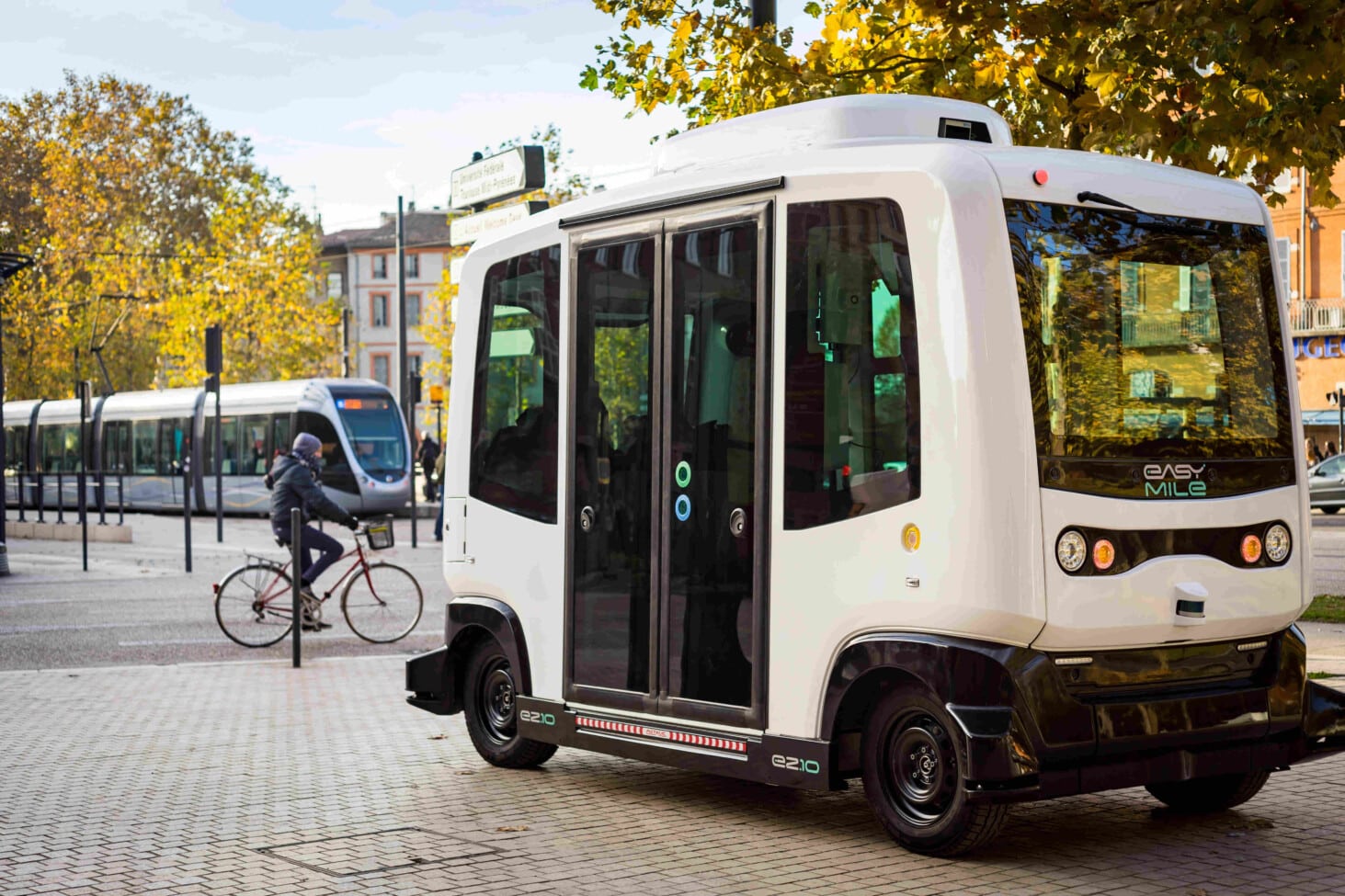
Ella, Vera and Anna are the secret stars of Karlsruhe’s Weiherfeld-Dammerstock district. Ella, Vera and Anna are the names of three autonomous minibuses from the EVA-Shuttle project, which have been on the road in the residential area on the Alb for over a year and a half. EVA stands for electric, connected and autonomous. The buses come from the French manufacturer Easymile, while the further development of the sensor technology for driving without human assistance was carried out by scientists at the Research Center for Information Technology (FZI).
Since the start of the project in 2018, the buses have been equipped with innovative technology and put through their paces on the routes of the Baden-Württemberg Test Area for Autonomous Driving (TAF) in Karlsruhe’s Oststadt district. The pilot phase with safety drivers began in January 2021, and passengers have now also been able to board since May 2021. Around 500 people from the district have already taken up the offer in the first few weeks, according to the Karlsruhe Transport Association (KVV), which is managing the project together with the FZI, at the request of karlsruhe.digtal. And the first regular passengers, such as a mother who takes her children to nursery with the shuttle buses, are already on board.
Offer for the last mile
The EVA shuttles are supported by a broad network of project partners such as the City of Karlsruhe, TÜV Süd, Bosch and Karlsruher init AG and are nothing less than the beginning of a new era in local public transport. The whole of Germany is looking to Karlsruhe for this project, emphasized Federal Transport Minister Andreas Scheuer at the official launch of the passenger service. The autonomous shuttles are intended to close the gaps in local public transport in densely populated residential areas without local transport lines in the immediate vicinity. According to local transport experts, covering the so-called “last mile” between home and the streetcar stop is often still seen as an obstacle to the use of sustainable mobility. “People need to get from their front door to their destination conveniently and without having to change trains,” says Scheuer. “Only then will they leave the car in the garage.”

Booking via app
The EVA shuttles can be booked conveniently and easily via the special “EVA Shuttle” app. Users are informed of their departure time near their home and arrival time at their desired destination via this app. The software from ioki, a subsidiary of Deutsche Bahn that develops concepts for autonomous local transport, ensures efficient route planning for the shuttles. The shuttle buses do not travel on fixed routes, but instead take the fastest possible route through the district as required. Although speed is not yet the top priority during the pilot phase. In the first few weeks, the buses will travel at a maximum speed of twelve kilometers per hour; by the end of June 2021, the maximum permitted speed will be increased only moderately to 20 kilometers per hour to minimize the risk.
Safety is the top priority
Safety is also the top priority for the planners led by project manager Daniel Grimm from the FZI during further test phases. “Not all questions have been answered yet,” says Grimm. “In addition, the sensor technology is not yet able to cope with all conditions.” In extreme weather conditions such as heavy rain or snowfall, the buses have therefore so far come to a standstill. However, Grimm believes that the final technical hurdles can be overcome relatively quickly. However, the legal requirements for the operation of driverless buses are still lacking. “Another eight years or so” will pass before then, estimates Grimm. By then at the latest, however, the vision of self-driving transport vehicles will no longer be a dream of the future.