
Regional competence center KARL wants to make AI more transparent
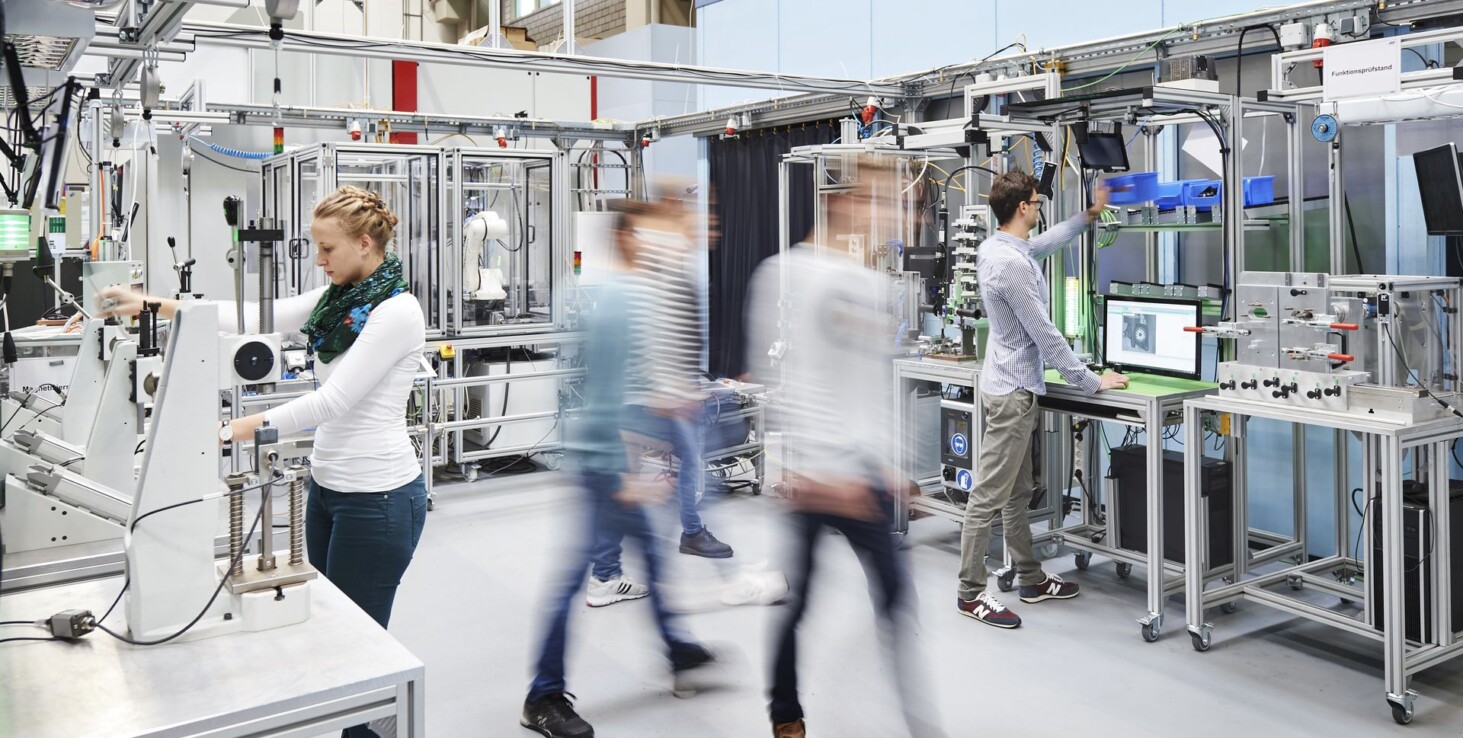
Cover photo: KARL competence center I Photo: Karlsruhe University of Applied Sciences – Business and Technology (HsKA)
Many people in Germany are rather skeptical about artificial intelligence (AI). This is the result of a representative survey conducted by the opinion research institute YouGov. According to the survey, the risks of AI applications are rated higher than the benefits. The fear of human civilization being controlled by machine-controlled systems is just as much a reason for the scepticism as a lack of understanding of the technical systems.
“Decisions made by AI can often only be understood by computer scientists,” says Prof. Dr. Steffen Kinkel, Head of the Institute for Learning and Innovation in Networks (ILIN) at Karlsruhe University of Applied Sciences (HsKA). In order to increase the acceptance of AI in society, the regional competence center “Artificial Intelligence for Work and Learning in the Karlsruhe Region” (KARL) was launched. Transparency and traceability of AI applications are just as much a focus of the interdisciplinary network as data protection and answering ethical and legal questions. People are also clearly at the center of KARL’s research. “AI is far from being creative. That’s why people also need to understand which programs they are working with,” emphasizes KARL coordinator Kinkel.

Network of science and business
KARL is one of four AI competence centers in Germany to date that are part of the “Future of Work: Regional Competence Centers for Work Research” priority supported by the Federal Ministry of Education and Research (BMBF ). KARL will receive almost eight million euros in funding until 2025. In addition to the ILIN, the Karlsruhe Institute of Technology (KIT) with the Institute of Human Factors and Industrial Organization (IFAB) and the wbk Institute of Production Engineering, the Fraunhofer-Gesellschaft with the Institute of Optronics, System Technologies and Image Exploitation (IOSB) and the Institute for Systems and Innovation Research (ISI), the high-tech entrepreneur network CyberForum and ten regional companies with a high level of AI expertise are also involved in the center. This makes KARL a practical extension of Karlsruhe as an AI location with flagship projects such as the Digital Hub for Applied Artificial Intelligence.
For Kinkel, partners from industry play a particularly important role in the implementation of AI projects from theory to practice. For example, a project for the innovative control of local public transport is to be initiated with the support of IT company INIT. “In the event of disruptions in local public transport, decisions for emergency plans are often still made in the control center based on the experience of the experts working there. However, it would make sense if the people there could access valid data from previous emergency plans,” emphasizes the KARL coordinator.

AI in the companies: The focus is on people
Through the transparent processing of research results and a permanent dialog between science and society, people’s concerns about AI applications should also be reduced in the future.
“AI will not lead to job losses. Work will merely change,” emphasizes Kinkel.
According to the principle of “relieving instead of firing”, the tasks of employees in companies will continue to change in the coming years. “We want to show that AI can indeed have a positive impact on the world of work,” says Kinkel. After all, many people in both production and offices still have to perform numerous monotonous and strenuous tasks. In the future, these employees could be more involved in managing processes and developing their creative potential. “When employees have more fun at work, this ultimately has a positive effect on the success of a company,” says Kinkel.