
Data That Makes a Difference: CorrelCon 2026 in Karlsruhe
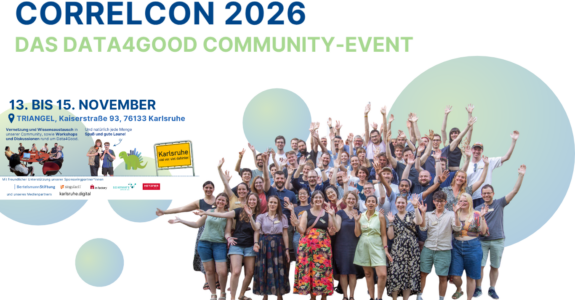
Many nonprofit organizations collect data but rarely have the time to analyze it. The CorrelAid association helps them by providing consulting services, educational programs, and a community of volunteers. From November 13 to 15, this community will gather for CorrelCon in Karlsruhe.
People who get involved in civil society want to bring about change. But how can we actually tell if they’re succeeding? Often, the problem isn’t a lack of data itself, but a lack of time, knowledge, or technology to analyze it effectively.
From Question to Project
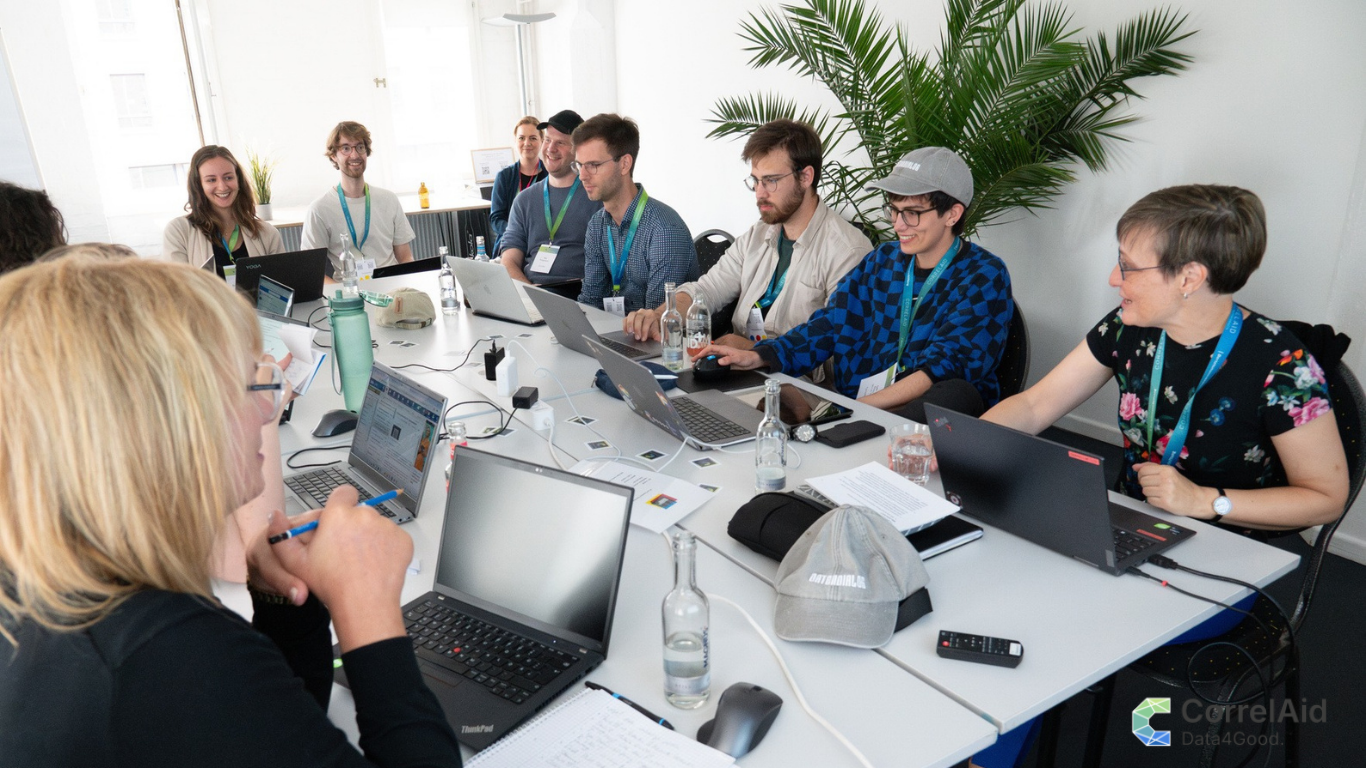
This is where CorrelAid comes in. The nonprofit helps civil society organizations make data useful for their work. One way it does this is through the “data consultation,” which is led by Nevena Nikolajević. Organizations can reach out with specific challenges and receive an initial consultation free of charge. Together, both sides work to identify where the actual problem lies.
“Many organizations know where the problem lies, but not how to turn that into a project,” says Nikolajević. CorrelAid helps clarify these issues, connects organizations with other initiatives, matches them with suitable volunteers, or even supports projects directly.
Measuring Impact, Gaining Knowledge
A common topic is impact measurement. Many organizations want or need to demonstrate the impact of their work. “Because that’s the currency of civil society,” says Nikolajević.
A project with TEN SING, a Germany-wide youth music network, demonstrates how this can work. The organization felt it was no longer able to effectively reach its local groups. Together with CorrelAid, it therefore first considered which questions it actually wanted to answer. This led to an annual survey, the results and visualizations of which are available to the entire network. “And the participants can see: this is our network,” says Nikolajević. The data thus not only helps the umbrella organization; it also shows the individual groups that they are part of a larger whole.
In addition, many organizations are grappling with the topic of artificial intelligence. Often, however, the challenge lies more in day-to-day work than in new AI applications: How can knowledge be made more accessible?
A CorrelAid project addresses this very issue. An organization that establishes student councils in schools already had a carefully curated knowledge base. However, students often couldn’t find what they were looking for because they weren’t using technical terms. CorrelAid developed a chatbot that bridges the gap between technical knowledge and everyday language.
Sharing Knowledge, Building Skills
In addition to these projects, the association offers educational programs for volunteers, civil society organizations, and interested individuals. The formats range from courses lasting several weeks to one-day workshops and sessions lasting an hour and a half. The focus is not only on technology but also on learning to work with data more independently.
“We want to help people help themselves,” says Nikolajević. People should learn to recognize data in their own daily lives, better evaluate projects, and carry out their own initiatives…or at least know where to find support.
The CorrelAid community demonstrates that knowledge and experience don’t just flow in one direction. John-Marc Schodack has been volunteering with the organization for about two and a half years and, as a member of the extended board, oversees the community—from the local groups and chapters to the discussions on Slack.
Three Days of CorrelCon in Karlsruhe
Much of what CorrelAid does takes place online. The annual CorrelCon is therefore also an effort to bring the geographically dispersed community together. It is primarily aimed at volunteers but is also open to interested individuals who are not yet familiar with the organization—as long as there are spots available.
This year, CorrelCon will take place from November 13 to 15 in Karlsruhe, with the theme “The Human in the Loop.” Several program items address the question of how people work with new technologies and what role they continue to play in the process. The program includes, among other things, the workshop “Using and Adapting Small Language Models,” an introduction to geodata, and a workshop that combines OpenStreetMap data with German census data. Coding agents are also a topic of discussion.
Martin Weiß from OK Lab Karlsruhe, a local expert, will also be participating; he will provide an introduction to open geodata and geographic information systems. Dr. Julia Seitz-Sänger and Thimo Schulz from the Karlsruhe Institute of Technology will lead a session on the thoughtful use of generative AI.
The event will take place at TRIANGEL Transfer | Kultur | Raum in downtown Karlsruhe. The kickoff on Friday evening will be followed by workshops and discussions on Saturday, and on Sunday by additional sessions and an inside look at the CorrelAid teams. Participation and overnight stays in shared rooms at a youth hostel are free of charge; a 50-euro travel subsidy is available if needed.
According to a recent announcement from CorrelAid, the event is fully booked with more than 70 registrations. Anyone wishing to be added to the waiting list can contact the organization directly.
It’s no coincidence that CorrelCon takes place in a different location every year. This is the association’s way of reaching out to the local community in each city. In Karlsruhe, the regional local chapter is also set to become more active again. Anyone interested in data-related topics, just starting their career, or with their own project idea can find a community there.
Not just in front of the screen
CorrelCon isn’t just about workshops and presentations, though. For many, the conversations in between are an important part of the event. “It’s also very much about these conversations in between,” says Nikolajević. And breaks are part of it, too: a walk, a bit of November sunshine, time to chat away from the program.
For John-Marc Schodack, CorrelCon is above all a chance to reconnect with people he usually works with online. “I mean, sure, it works—a lot of what we do works online and goes well remotely—but it’s still a little different when you’re with people in person and maybe have those conversations by the coffee machine.”
Friendships have also developed within the community. “I’ve made some good friends at CorrelAid, even though they live elsewhere,” Schodack says. That’s why getting together at least once a year to have fun is something special.
Conversations Turn into Projects
Such encounters can breathe new life into volunteer work. Conversations spark ideas, and ideas sometimes turn into projects—and these don’t always come from an organization with a specific request. Volunteers can also bring their own projects to the network and find fellow volunteers to join them.
One example is the collaboration between a Berlin local chapter group and the Nature and Biodiversity Conservation Union (NABU) on hornet species in Germany. Volunteers can report their observations; a team is working on a dashboard that visualizes the collected data.
Projects like this one show that data work doesn’t necessarily require a large infrastructure or a professional team. Often, all it takes is people with a question, others with the right skills, and a place where the two can come together. That’s exactly what CorrelAid aims to create.
Anyone who wants to get involved is welcome to do so through the local groups, project work, or educational programs. Organizations with a data-related question can also reach out to CorrelAid.
After all, the crucial question isn’t just what data is available, but what people can do with it together.
CorrelCon 2026 – The Human in the Loop
When: November 13–15, 2026
Where: TRIANGEL Transfer | Culture | Space, Kaiserstrasse 93, Karlsruhe
Organizer: CorrelAid e. V.
For three days, CorrelAid’s annual community conference brings together people who want to use data to drive social change. The program features workshops, discussions, and opportunities for networking—covering topics such as AI, open data, geodata, and data literacy, among others.
Participation is free of charge. If necessary, CorrelAid will cover the cost of lodging in shared rooms and offer a travel allowance of 50 euros.
The event is already fully booked. Those interested can contact CorrelAid to inquire about possible waitlist spots.
Further information: CorrelAid
Contact: info@correlaid.org