
Karlsruhe is so smart: The Smart City presents itself at the in-house exhibition!
The in-house exhibition on 11 May 2023 offers employees of the City of Karlsruhe a varied program of lectures, panel discussions and hands-on activities. On the marketplace, karlsruhe.digital will show what makes Karlsruhe a smart city.
Karlsruhe: smart, digital & connected
The Smart City Karlsruhe is characterized by numerous projects in the areas of mobility, administration, infrastructure, energy, as well as cultural and creative industries. These will be presented to their colleagues on May 11.
Employees of the City of Karlsruhe who would like to get to know the Smart City better will have the opportunity to experience the Smart City projects of the City of Karlsruhe live on the marketplace from 10 a.m. to 4:30 p.m., ask questions and try them out.
Included are:
karlsruhe.digital
karlsruhe.digital makes the strengths of the digital location visible and tangible. Karlsruhe is one of the most important IT hotspots: 4,800 IT companies with 30,000 employees, 10,000 students in IT-related courses, one of the most digital administrations in Germany and media art throughout the city characterize the fan-shaped city. The latest addition: the #SmartProductionPark in Oststadt – it addresses start-ups that are taking the digitalization of production to the next level.

The karlsruhe.digital initiative brings together Karlsruhe stakeholders from science, business, culture and administration to promote Karlsruhe as a driver of digitalization. With the Colourful Night of Digitalization and the InnovationFestival @karlsruhe.digital, the initiative makes digitalization in and from Karlsruhe visible and tangible with two event highlights. The initiative also focuses on holistic communication and the acquisition of specialists. It pools expertise, promotes networking and addresses topics holistically in order to actively shape the digital future of the city.
On May 11, visitors will learn more about their city – one of Germany’s leading digital locations.
The digital twin of the city of Karlsruhe
The digital twin represents the digital image of the real city. It offers a collaborative platform that city administrations and citizens can use. The digital twin can clearly illustrate complex and dynamic relationships and test changes in advance in simulations. The digital twin is a central basis for the development of the smart city.

In a first step, the existing 3D city model will be expanded into a digital geo-twin, which will then form the geodata basis for the digital twin. To this end, the 3D city model will receive additional components, specialist data and real-time data and optimized accessibility for the city administration and the public. This digital geo-twin will be presented at the in-house exhibition using the “Alter Schlachthof” prototype.

Virtual reality (VR) applications make the digital twin accessible and thus tangible. With this technology, interested parties can virtually explore the planned redesign of Kaiserstrasse and the new market square.

Karlsruhe as a science location
Over the years, Karlsruhe has developed into an important science and research location. Renowned university and research institutions create an environment characterized by innovation. Future topics such as sustainability and digitalization are always on the agenda. Karlsruhe places particular value on networking and the intensive exchange between science, business, culture and urban society.

At the marketplace, employees can find out more about the events and projects of the Science Office: from the EFFEKTE science festival to the Colourful Night of Digitalization, the InnovationFestival, KA-WLAN, the karlsruhe.digital initiative and much more.
Sensor City
Sensors are an important part of a smart city. In a pilot project, the first small measuring stations were installed at Friedrichsplatz, which transmit measurement data in real time via LoRaWAN wireless technology. This data can be processed via interfaces in the geoportal and visualized, for example, in the form of map-based interactive dashboards.

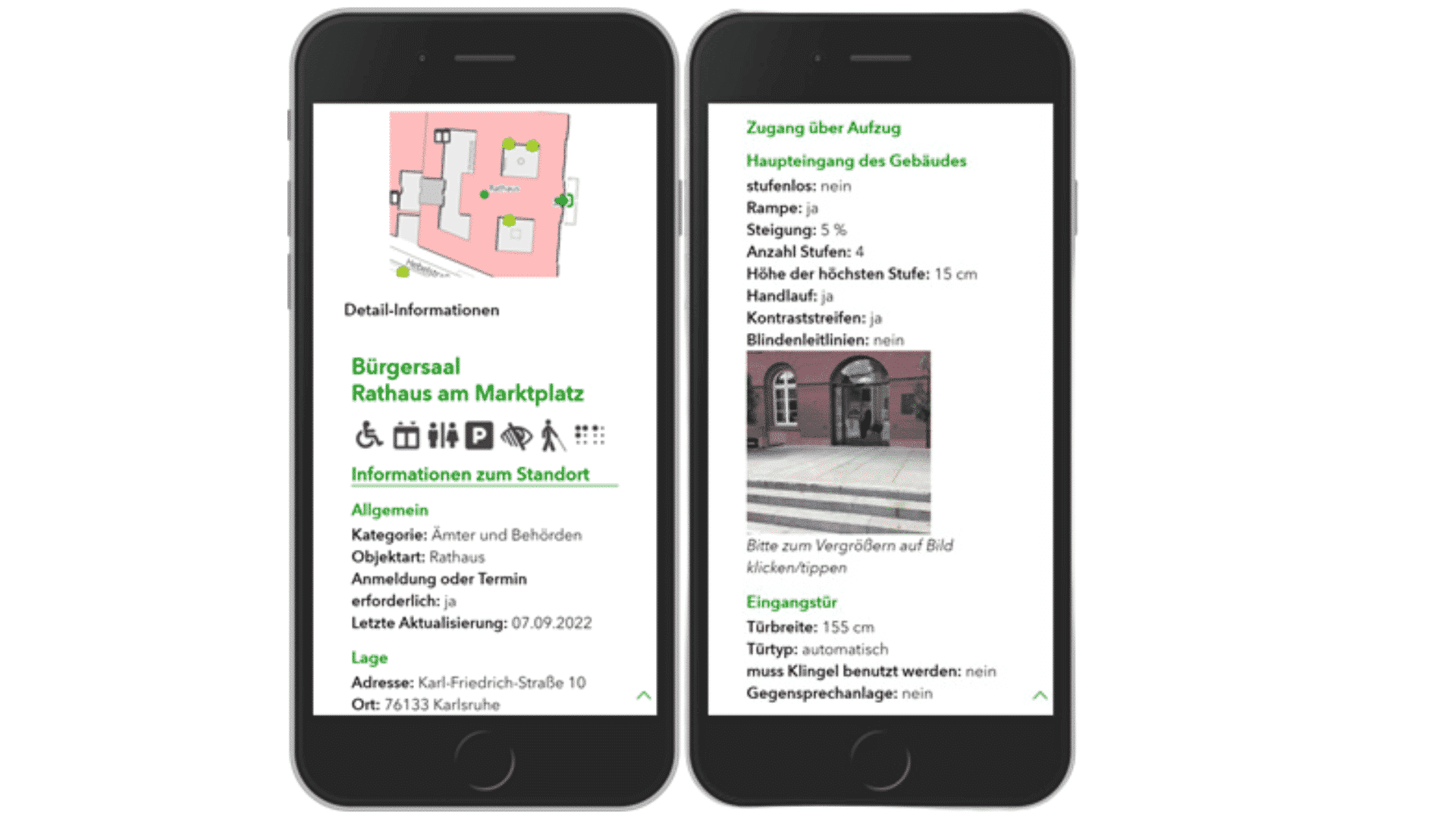
However, other live information, such as the operating status of elevators or the occupancy of disabled parking spaces, will also play a role in the future smart city and can supplement applications, such as Karlsruhe barrier-free, with important information. The real estate office will be presenting various examples of applications for the
City sensor at the in-house exhibition on May 11.
Karlsruhe barrier-free – The digital companion for people with disabilities
Whether it’s a public office, restaurant or sports hall – many people visit public places every day and are dependent on barrier-free access .
Defective elevators or steps without a wheelchair ramp in the entrance area of buildings – all of these can present insurmountable hurdles in everyday life for people with mobility impairments,” says Ulrike Wernert, Municipal Disability Officer for the City of Karlsruhe.
So that disabled and handicapped people can find out about the accessibility of the site before their visit, there is a interactive application (web app) on the Internet. This can be used to answer these and many other questions:
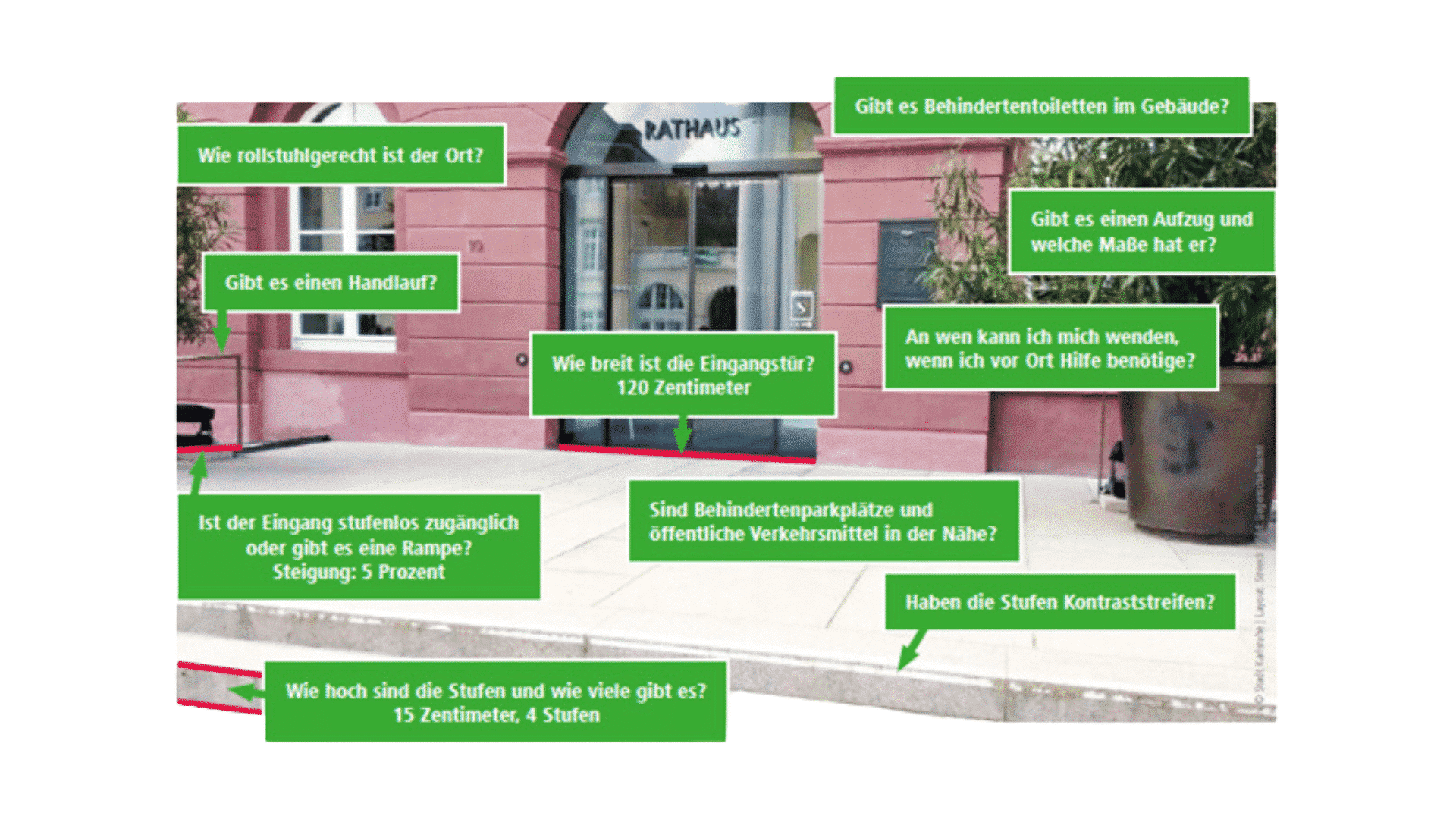
At the stand, the real estate office will be presenting the new web app and demonstrating opportunities for participation in the expansion of the locations.
Karlsruhe.app – Your city. Always there.
Download the Karlsruhe.app now and try it out!
The “marketplace” is home to numerous apps and services (add-ins). The app also offers a large selection of information channels. You are always up to date with the calendar of events.
Visitors to the in-house exhibition can form their own impression, ask the team from the Office for Information Technology and Digitization questions and try things out.
Public utilities
At the stand on the marketplace, you can interactively experience a selection of sensors and possible use cases.
The sensors used rely on our LoRaWAN radio network active in Karlsruhe. The data can be viewed on site on a monitor in a customizable dashboard.

Radio-based sensors enable the cost-effective automatic recording of information without having to lay expensive cables for power or data transmission. Sensors that work with LPWAN-based (Low Power Wide Area Network) can send data for several years until the battery needs to be replaced. Thanks to the wide range of possible applications , processes can be made more efficient, data bases for decisions can be created for the first time or documentation can be automated.
The grid service will also be presenting the digitalization of the meter infrastructure in Karlsruhe with a demonstration wall. The central component here is the intelligent metering system, also known as the smart meter. In addition to the secure, data-protected remote reading of metering data across all sectors (electricity, gas, water, district heating), the smart meter is becoming the linchpin for secure grid operation in the context of increasing volatile feed-in and changing consumption patterns (electromobility, decarbonization of heat supply).