
Digitization of the Badisches Landesmuseum is progressing rapidly
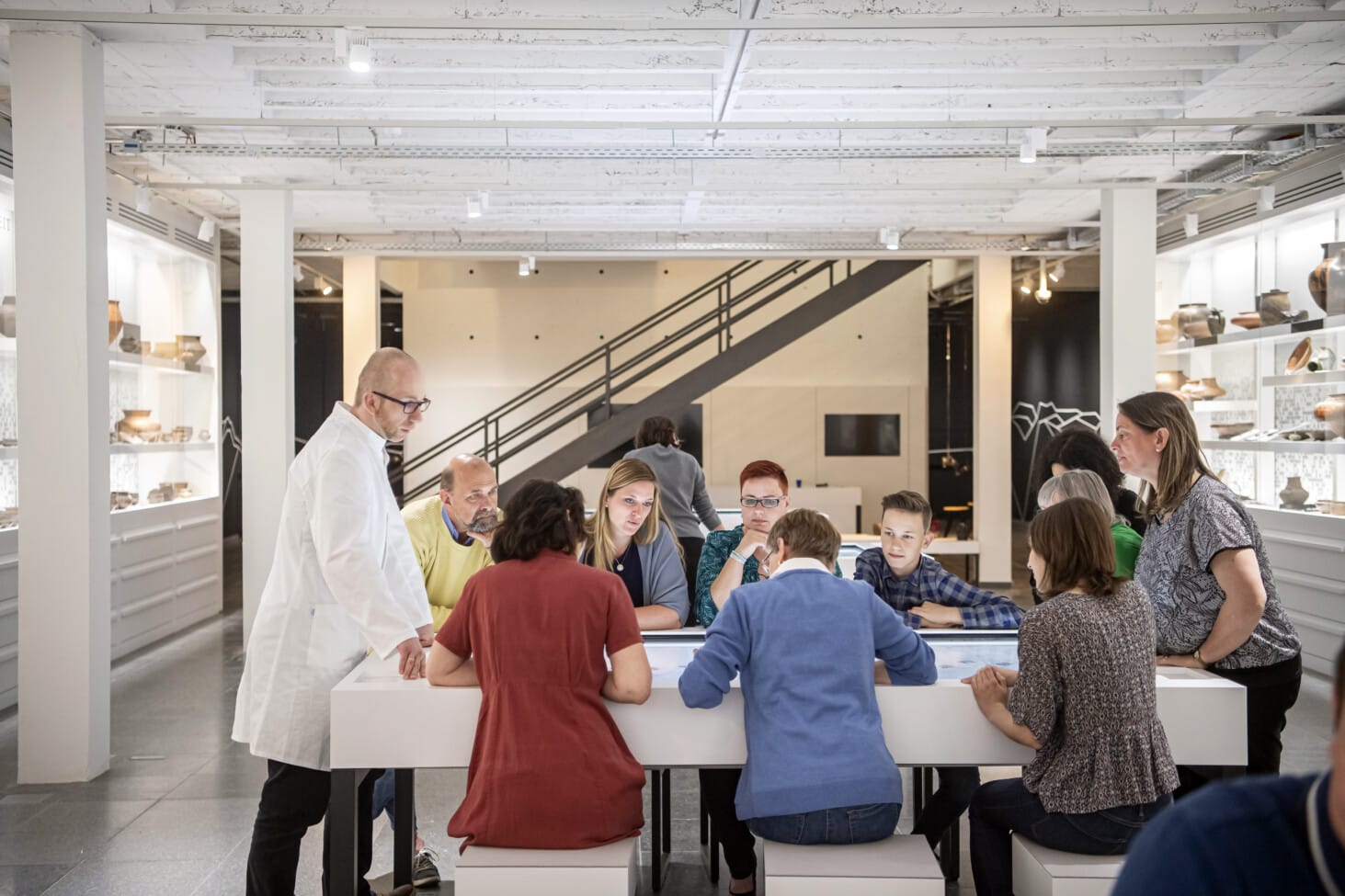
Digitalization is moving in behind the façade of Karlsruhe Palace: New ways of telling history and stories are being explored at the Badisches Landesmuseum.
Since the city was founded over 300 years ago, the palace has been a landmark of the fan-shaped city and the most photographed motif for tourists. However, even if the restored façade of the baroque building exudes the splendor of past grand ducal days, inside work is being carried out at full speed on the contemporary and future-oriented presentation of Baden’s history. Visitors to the Baden State Museum can also see this for themselves.
The centerpiece of the special exhibition “Archaeology in Baden” is the Expothek with media tables, object scanners and interactive stations. In the Marble Hall of the palace, visitors can take a virtual journey back in time to the heyday of the Grand Duchy of Baden using VR glasses. And for the special exhibition “Emperor and Sultan – Neighbors in the Middle of Europe 1600 to 1700”, a so-called story guide is being used for the first time instead of a traditional audio guide. During the one-and-a-half-hour tour, the information about the exhibition is conveyed as an exciting dialog between the protagonists of the special exhibition.

Baden State Museum, Photo: ARTIS – Uli Deck
Digitization enjoys high priority at the Badisches Landesmuseum
“The digitization of the exhibitions is currently a very high priority for us,” says digitization strategist Michael Danz from Museum Communications in an interview with karlsruhe.digital. In future, the collections are to be digitized even further. Museum visitors will also receive special information on the individual exhibitions with a digitized visitor pass.
The special exhibition “Archaeology in Baden” is currently primarily a field of experimentation for Danz. “Here we can try out new techniques and test their effect on our guests,” explains Danz. The feedback from users is an extremely important factor in the realignment of the museum. “Modern technology only helps us move forward if people accept it,” emphasizes Danz.
Inspiring a younger audience for museum work with the digitization campaign
According to Danz, most of the museum guests are over 60 years old. “Some collections seem downright dusty. If we want to get more younger people interested in our work in the future , we absolutely have to break new ground,” says Danz. After all, even a traditional museum has to pick people up in their familiar environment and not close itself off to technological change. In addition, the multimedia presentation of the collections represents added value for all visitor groups. For this reason, the permanent exhibitions of the Landesmuseum are also to be gradually supplemented by digital offerings. “This allows to provide people with much more background information on the individual exhibits than with a simple information board,” says Danz, summing up the added value of the digitization strategy. In addition, virtual reality or audio tours can be used to tell stories from the various historical eras in a more exciting way.
Positive feedback from guests
The new forms of communication have met with a positive response from visitors, says Danz, referring to initial internal surveys. “People are open to the innovations and are happy to try things out,” says Danz. Another experimental area of the State Museum is the museum x in the Museum am Markt between Schlossplatz and Marktplatz. There, new formats can be tested in practice with guests to see how they can be used in the Landesmuseum.