
Dirk Fox
Secorvo Security Consulting GmbH / KA-IT-Si


The stakeholders from business, academia, culture, politics, and government involved in the karlsruhe.digital initiative are shaping Karlsruhe as a driving force behind digitalization for a sustainable and self-reliant society and have drafted the following manifesto.
As a city of law, a hub for computer science, a center for excellent IT security research, and home to leading technology companies with strong commitments to small and medium-sized businesses, academia, and civil society, Karlsruhe offers an outstanding foundation for helping to shape Europe’s digital sovereignty.
In a world shaped by digital dependencies, monopolistic platforms, opaque AI systems, and geopolitical uncertainties, Karlsruhe can make a unique contribution: not through isolation, but through expertise, trust, openness, and the ability to take action.
For us, digital sovereignty means making self-determined decisions, acting securely, recognizing dependencies, creating alternatives, and remaining capable of taking action in an emergency—even in the digital world. We are convinced that it is a central prerequisite for a functioning, modern, free, and democratic society. Karlsruhe isn’t waiting for digital sovereignty—the stakeholders in Karlsruhe are shaping, testing, explaining, and successfully putting it into practice.
Digital sovereignty does not arise solely from technology, but from an understanding of technology and the ability to evaluate, shape, and use it responsibly. In Karlsruhe, we bring together unique conditions for this: excellence in computer science, IT security, data protection, law, ethics, AI, and technology transfer meets an innovative public administration, international appeal as a city of media art, and strong entrepreneurial drive.
Karlsruhe is becoming a testing ground for sovereign digital solutions. Research institutions, universities, companies, government agencies, startups, and civil society are working together to test how secure, transparent, and user-oriented digital systems can function in everyday life. The goal is to make what is developed here visible, usable, and scalable.
Without IT security, there can be no digital sovereignty. Karlsruhe is known for its expertise in making digital systems robust, verifiable, and resilient. We promote security by design, privacy by default, encryption, secure identities, trustworthy infrastructures, and resilience against attacks. These are not merely add-ons, but the foundations of sovereign digitalization.
Karlsruhe combines technological expertise with a commitment to the rule of law. Informational self-determination, data protection, transparency, traceability, and fair digital business models are not obstacles to innovation, but rather hallmarks of European quality. Digital sovereignty requires technology that protects freedom, respects fundamental rights, builds trust, and clearly assigns responsibility. Karlsruhe combines “will” (the political and legal will toward self-determination) with “ability” (technological expertise) and “understanding” (social education).
Karlsruhe is helping to shape digital sovereignty, as complex technologies such as artificial intelligence (AI) are not only applied in Karlsruhe, but also understood, evaluated, and used responsibly. For critical applications, we create traceable models, auditable systems, and clear avenues for human intervention, and we prioritize human responsibility. People remain the final decision-makers—technologies like AI are meant to empower and support, not to patronize.
Sovereign digitalization requires access to what is critical: source code, interfaces, verification mechanisms, security certifications, and quality standards. Karlsruhe relies on open source, verified “trusted sources,” and transparent software ecosystems wherever this strengthens independence, security, and interchangeability. What matters is not ideology, but verifiable trust and the ability to understand and adapt source code.
Karlsruhe is strong because small and medium-sized enterprises, academia, culture, and the public sector are closely intertwined here. These stakeholders must retain control over sensitive data, access, and terms of use. We promote decentralized data spaces, clear authorization models, and secure European infrastructures, and we enable cooperation without losing control.
Those who cannot switch lack autonomy. We advocate for open standards, interoperable systems, portable data formats, and standardized interfaces. Digital solutions must be transparent to users and designed in such a way that government agencies, businesses, and citizens can take their data with them, connect systems, and switch providers.
Digital sovereignty must not remain merely on paper. It must be reflected in procurement, governance, pilot projects, and among users. We call on public procurers, research institutions, and companies in the region to be pioneers and game-changers by making security, data protection, transparency, interoperability, data sovereignty, and the ability to exit the system binding criteria. Seals of approval, communities of values, and certifications serve as purchasing recommendations for digitally sovereign solutions and provide assurance.
Digital sovereignty requires people who can use digital systems critically, design them competently, and make responsible decisions about their use. In Karlsruhe, we promote educational, continuing education, and certification programs that empower citizens, government agencies, businesses, and professionals to recognize digital dependencies and make use of sovereign alternatives.
As a city of media art and law, Karlsruhe also brings a particular strength to the table: institutions make complex digital technologies and their societal impacts tangible and accessible to a broad public through low-threshold offerings. In this way, media art makes a decisive contribution not only to the technological development of digital sovereignty, but also to its social anchoring, critical reflection, and active dissemination.
In Karlsruhe, we are committed to bringing digital sovereignty from theory into practice. The region boasts strong research, high-performing companies, technology transfer institutions, networks, and application-oriented testing environments. We leverage this strength to turn principles into concrete products, standards, pilot projects, and scalable solutions. This is how knowledge creates impact.
Decisions about Europe’s digital sovereignty are not made in Brussels or Berlin. It emerges where expertise is pooled, technologies are tested, and dependencies are reduced in practice. Karlsruhe demonstrates how a city—and, by extension, providers of digitally sovereign technologies—can operate in a way that is economically successful, technologically open, and at the same time digitally self-determined, thereby actively shaping digital sovereignty. In this way, digital sovereignty becomes a competitive advantage for the city—along with its providers of digitally sovereign products and services—as well as for its businesses, institutions, and citizens.
A person is digitally empowered if they remain capable of taking action at any time—especially when necessary—understand what they are using, are aware of dependencies, and can switch providers and solutions.
Dirk Fox
Secorvo Security Consulting GmbH / KA-IT-Si

David Hermanns
CyberForum
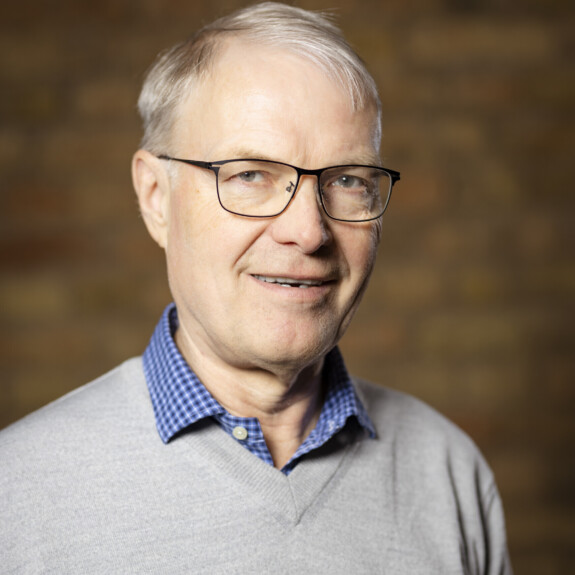
Matthias Hornberger
CyberForum

Martin Hubschneider
CyberForum

Markus Losert
City of Karlsruhe

Alexander Mädche
Karlsruhe Institute of Technology

Rainer Neumann
Karlsruhe University of Applied Sciences
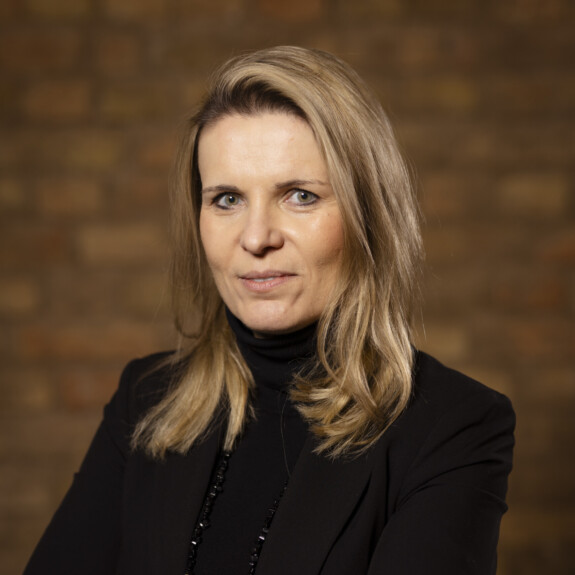
Dominika Szope
City of Karlsruhe

Jan Wiesenberger
FZI Research Center for Information Technology