
#digiTALK about digital encounters
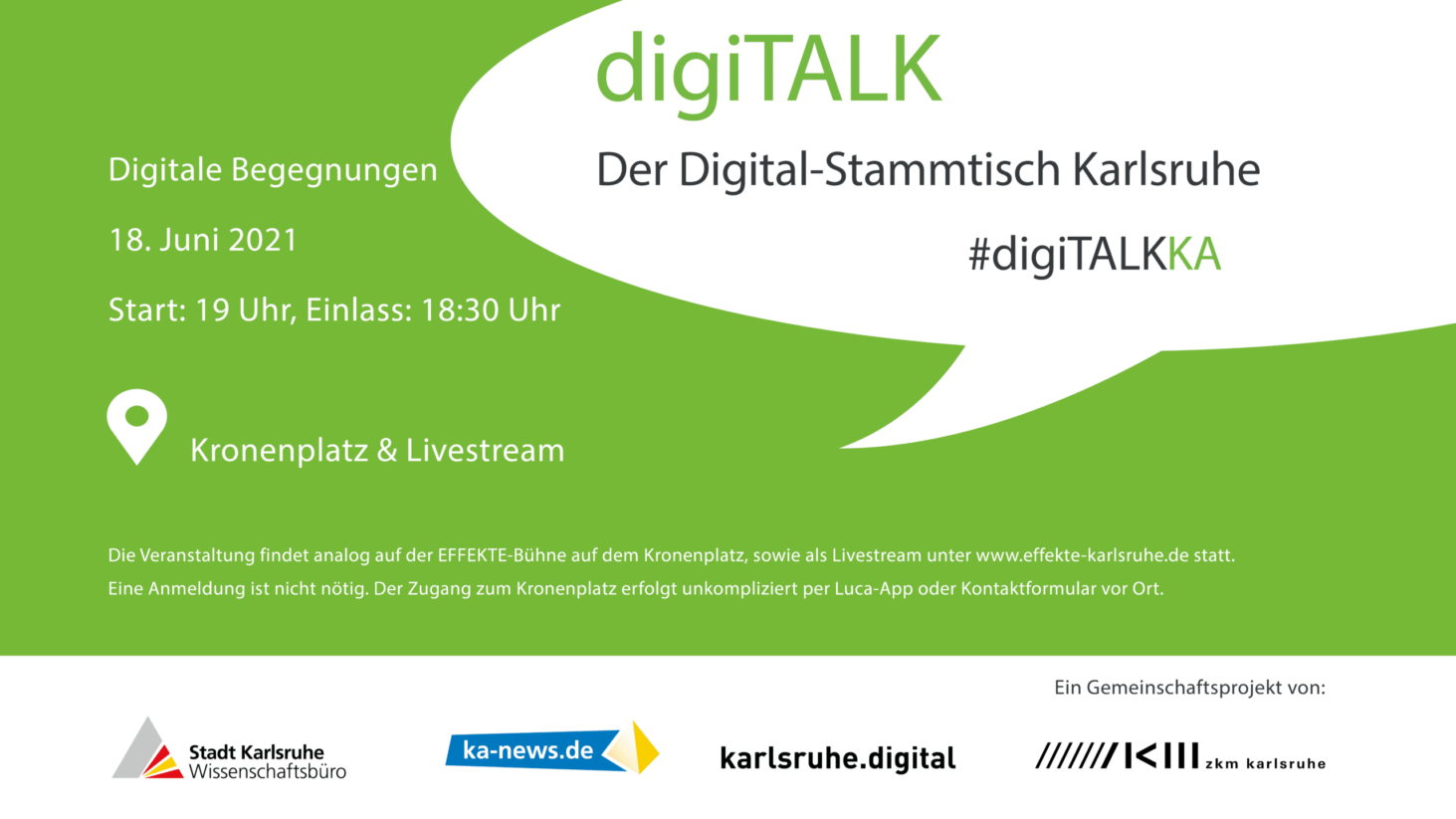
On June 18, the #digiTALK as part of the EFFEKTE science festival will be all about digital encounters and how they are changing our everyday lives.
The pandemic has temporarily reduced our lives to digital encounters – at work, at school, in our free time, in the office or in museums. What do these digital encounters mean for our social interaction, for communicative exchange, but also for shared experiences? What is new about digital encounters – and what will remain once the pandemic is over? Dominika Szope, Micha Pallesche and Markus Losert will discuss this at #digiTALK together with SWR presenter Uwe Gradwohl on the EFFEKTE stage at Kronenplatz in Karlsruhe.
Dominika Szope on the museum in the 21st century
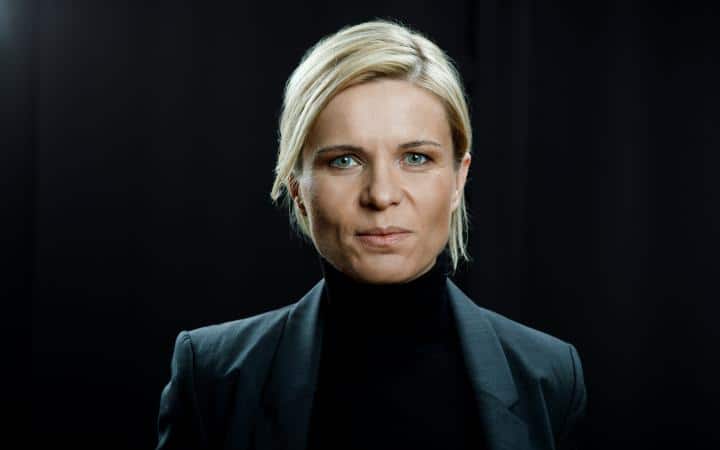
Dominika Szope studied art history, philosophy/media theory and architecture at the Karlsruhe University of Arts and Design. After three years as a research assistant at the ZKM | Center for Art and Media Karlsruhe from 2003-2006, she took up a teaching position in the Department of Media Studies at the University of Siegen in 2006. As head of the Communication & Marketing department at the ZKM, Dominika Szope and her team have been responsible for communication on a national and international level since 2011. At #digiTALK she will talk about “The museum in the 21st century. Rethinking encounters – expanding access.”
Micha Pallesche on learning in the future

Micha Pallesche is head of the Ernst-Reuter-Schule Karlsruhe, a school with a multi-award-winning media education profile. Among other things, his school was awarded the “delina” for the best German e-learning concept in 2016 and has been the first smart school in Baden-Württemberg and the third in Germany since December 2017. His keynote speech shows that learning will no longer only take place in educational institutions such as schools in the future. Digitalization will also make it possible to learn everywhere and throughout life in the future. With the concept of digital learning islands in Karlsruhe, this development is to be taken up and learning locations in the district are to be connected and made visible in a virtual map and app.
Markus Losert on digital encounters in administration

Markus Losert is CIO and CDO of the City of Karlsruhe. He has worked as a lecturer at various institutions, chairs the ICT working group of the Association of German Cities and is a member of the IT Cooperation Council of the state of Baden-Württemberg. Since 2017, he has been Director of the newly created Office for Information Technology and Digitization. He will provide insights into the administration. How has digitalization changed communication within the city administration, but also in inter-municipal and international cooperation? What can we expect in the future? ChatBot and multifunctional app are just around the corner.
No registration, no test – just join us on site or via livestream!
After the short keynote speeches from the perspectives of culture, education and administration, the audience is cordially invited to participate with questions and ideas. Admission starts at 6:30 pm so that the #digiTALK can begin at 7 pm.
Registration is not necessary: free entry to the event site on Karlsruhe’s Kronenplatz is easy with the Luca app or by filling out a contact form on site. Masks must be worn until you reach your seat. Delicious drinks and snacks will be available at the intro CAFÈ stand on the grounds.
If you can’t be there, you can tune in via the EFFEKTE livestream.
#digiTALK – the digital regulars’ table in Karlsruhe
The #digiTALK is the digital regulars’ table in Karlsruhe. It is jointly organized by the Science Office of the City of Karlsruhe, the ZKM | Center for Art and Media Karlsruhe, the news portal ka-news and the karlsruhe.digital initiative. Moderated by Uwe Gradwohl (SWR), #digiTALK discusses the social challenges of digitalization with the audience.
#digiTALK meets. EFFEKTE science festival
The #digiTALK on digital encounters takes place as part of the EFFEKTE science festival. EFFEKTE will bring science and research to life with a diverse program of talks, workshops, theater, film screenings and much more at various locations in Karlsruhe and via livestream until June 20, 2021.